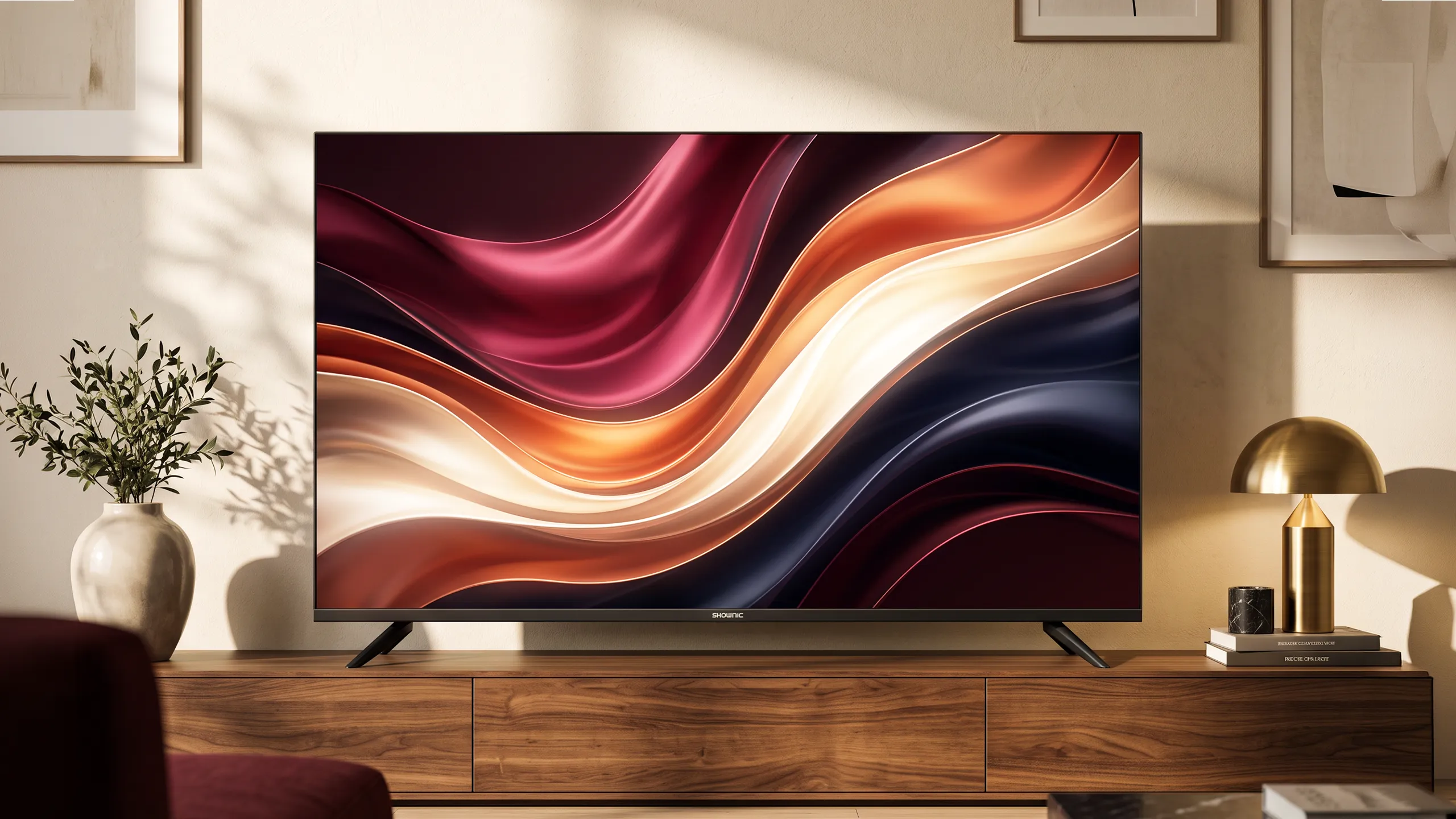
The first question most people ask when buying a TV is: how big should it be? While it is tempting to go as large as possible, screen size should be matched to your room size and viewing distance. Watching a 75-inch TV from two meters away can be an uncomfortable experience, while a 50-inch screen in a large living room can feel underwhelming.A simple rule of thumb is to divide your viewing distance (in centimeters) by 2.5 to get the ideal screen size in inches. So if you sit approximately 3 meters (300 cm) from your TV, the ideal screen size would be around 55 to 65 inches. For larger rooms or home theatre setups, 75 inches and above become genuinely worthwhile.Shownic Tip: Always measure your wall and viewing distance before visiting our showroom. Our team can help you simulate exactly how different screen sizes will look in your specific room layout.
2. Display Technology: OLED, QLED, or LED?
This is arguably the most technically complex decision you will face. The three main display technologies available today are LED, QLED, and OLED, and they each have distinct strengths.LED TVs are the most affordable and widely available. They use a backlight to illuminate an LCD panel. While image quality has improved significantly in recent years, they do not match QLED or OLED in terms of contrast and color depth.QLED technology, developed by Samsung and other manufacturers, uses quantum dots to enhance brightness and color volume. QLED TVs perform exceptionally well in brightly lit rooms and can achieve very high peak brightness levels, making them ideal for daytime viewing in rooms with lots of natural light.OLED technology uses organic compounds that emit their own light, meaning individual pixels can be turned completely off to achieve true blacks and infinite contrast ratios. OLED TVs produce the most cinematic picture quality available and are the preferred choice for dedicated home cinema rooms or darker environments. The one limitation is that they can be slightly more vulnerable to burn-in with static images over time.
3. Resolution: Do You Actually Need 8K?
4K resolution (3840 x 2160 pixels) is now the standard for any TV above 43 inches, and for good reason — it delivers four times more detail than Full HD. The difference between Full HD and 4K is clearly visible on screens above 50 inches, making the upgrade very much worthwhile.8K resolution (7680 x 4320 pixels) is the next frontier, with some manufacturers now offering 8K TVs. However, the honest truth is that 8K content is extremely limited right now. Most streaming services top out at 4K, and broadcast television is still largely 1080p in the UAE. While 8K TVs look incredible in showrooms showing demo content, they are not a practical necessity for the vast majority of households today. We recommend investing in a great 4K TV rather than spending significantly more on 8K for content that barely exists yet.
4. Smart Platform and App Ecosystem
The smart platform running your TV determines which apps are available, how intuitive the interface is, and how well the TV integrates with your other smart devices. The major platforms available in UAE-market TVs today include Google TV, Tizen (Samsung), webOS (LG), and Roku TV.Google TV, found on Sony and several other brands, is highly versatile and integrates seamlessly with Android phones, Google Home devices, and the entire Google ecosystem. Tizen and webOS are proprietary but well-developed platforms with excellent app libraries and smooth interfaces. If you are already embedded in the Apple ecosystem, look for TVs with strong AirPlay 2 support.Before buying, verify that the TV supports the streaming apps you use most — whether that is Netflix, Shahid, OSN+, Disney+, or YouTube. Most premium TVs will support all of these, but budget models may have a more limited library.
5. Sound Quality: Do Not Overlook the Audio
One of the most overlooked aspects of buying a TV is sound quality. Modern TVs are extremely thin, which leaves very little room for decent speakers. Most budget and mid-range TVs produce flat, tinny audio that does not do justice to their stunning visuals.When evaluating a TV, look for models with Dolby Atmos support, larger total speaker wattage (40W and above), and downward- or side-firing speaker configurations that bounce sound off surfaces for a more immersive effect. Premium TVs from Sony and Samsung have made impressive strides in built-in audio quality.If audio quality is important to you, consider pairing your TV with a soundbar. A good soundbar can transform the viewing experience dramatically. Shownic carries a wide range of soundbars to complement every TV in our collection.
Bonus: Connectivity and Future-Proofing
Finally, check the connectivity options. Look for at least three HDMI 2.1 ports (important for gaming at 4K/120fps), USB ports, optical audio output, and Bluetooth for wireless headphones or speakers. Wi-Fi 6 support is increasingly valuable as internet speeds continue to rise. These details may seem minor but they significantly affect how useful your TV will be over its five to seven year lifespan.
Ready to Find Your Perfect TV?
At Shownic, we carry an extensive range of smart TVs from the world’s leading brands, including OLED and QLED models in sizes from 43 to 85 inches. Our in-store TV demo area lets you see the difference between display technologies side by side so you can make a truly informed decision. Visit shownic.com or come into our Dubai showroom today.